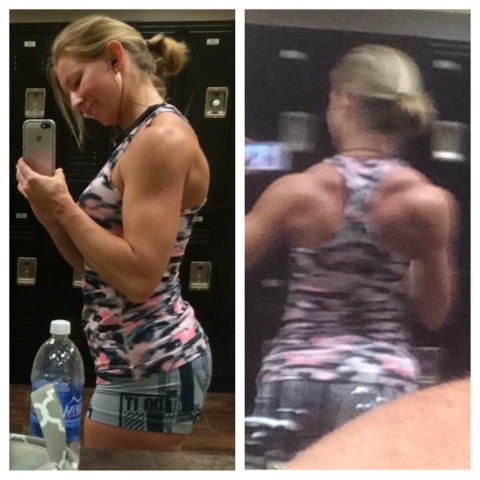
Monday, July 7, 2014

Meal Planning 101

Goal: 4-5 meals a day 
Ideal times: wake up, +3 hours, NLT 8 p.m.
Most important meals: pre & post workout (protein!)
The amount of Protein/Carbs/Fat you need are dependent on your goal Calorie intake. 

http://macronutrientcalculator.com
Is my favorite site to calculate. 


When you are eating lean, your food choices are slightly limited. The flavors however are endless. Be creative OR get bored and increase your chance of quitting.

Example Meal Plan: approx.1600 cal. (Adjust protein portions and veggies portions to increase calories.)  Slightly decrease your calories (10-20%) on days you don't work out.  

Breakfast: 1/2 cup plain oatmeal with 1/2 scoop vanilla whey protein, cinnamon, almond slices, 1/3 cup blueberries.
Or
3 egg whites scrambled with onions, red & green bell peppers and a dash of pepper and crushed red pepper flakes

Post Workout Snack:
Protein shake (I like ISO 100 fudge brownie)
Greek yogurt (Fage is my FAV!!)

4 oz Lean ground turkey with taco seasoning
1/2 chopped tomato
1/2 cup shredded iceberg
1/2 avocado
2 tbsp salsa 

1/2 cup non fat cottage cheese 
Protein shake

4 oz grilled or Baked Tilapia  
8 Asparagus Spears
1/4 sweet potato
1 c. Spinach salad w/1/2 cup carrots and 1 tbsp. balsamic glaze

4 oz grilled or baked chicken
1/2 cup brown rice
1/2 cup broccoli 

My Fitness Pal App breaks down Macro Percentages. 


Saturday, July 5, 2014

NO CHANGE???

I Love this article about why you are not losing weight or seeing a change!!

Despite your best efforts, are you confused about why you aren’t losing weight?

Although I’ve referred to it as losing weight, the number on the scale is not important. What matters is what your tape measure says, and how your clothes fit. 

Here are 18 reasons why you may not be achieving the results you had hoped for:

1. You are eating too much fruit

598020-58931-16

Although eating fruit as a snack is a much better option than reaching for a bag of crisps, the sugar in fruit (like all carbohydrates) gets broken down into glucose, and excess glucose in your body is stored as fat.

Don’t let this stop you from consuming fruit; simply opt for fruits high in antioxidants, like berries.

2. You are doing too much cardio (and not enough weight training)

cardio

Cardio is great for burning fat, but on its own it’s not enough. Weight training (obviously) helps you to build muscle, and by building muscle your body has to burn calories, which in turn boosts your metabolism. The higher your metabolism, the more calories you are burning…even while you aren’t active.

3. You aren’t getting enough sleep

 sleep2

We are all guilty of this; in modern society sleep is often overlooked, but it is essential to energise your body. There have even been research journals claiming that the biggest spike in fat burning hormones occurs during deep sleep.

4. You are not eating enough fat

1205-fat

Yes, you read that correctly, and no, I haven’t lost my mind. Fat is often seen as “the devil”, but good fats are vital for your heart; fats found in foods such as fish, nuts, eggs and avocados. The consumption of healthy fats increases energy and prompts the body to burn stored fat for fuel.

5. Your alcohol consumption is high

alcohol-composite

We all have different preferences for our alcohol intake, but if yours is high then it could be sabotaging your weight loss. Your body can’t store alcohol, so it metabolizes it immediately. This may sound great, but while your body is focusing on processing the alcohol, your metabolism won’t be working as efficiently on other foods that you’ve eaten; like breaking down carbohydrates and fat. This means that those calories will be converted into fat, and stored in your body.

6. You are just relying on exercise

bad-diet1

It is a common belief that if you exercise then it makes it acceptable for you to eat more. Sadly this isn’t true. Many people “reward” themselves for going out for a run by eating an extra slice of cake for example. Exercising is great for burning calories and building muscle, but if you increase your calorific intake then you aren’t going to see any improvement in your body. Working out will build your muscle, but unless you eat healthier, then you will never get to see that muscle.

You could do 1,000 crunches per day, but if you don’t adopt a clean eating lifestyle, then those abs will stay hidden.

7. You aren’t being consistent

 diet-cheating

We all have good intentions when starting a new workout and healthy eating regime, but many of us let it slip from time to time. Nobody is perfect; I am yet to meet anyone who has completely given up all treats for example. But if you are repeatedly finding yourself “falling off the wagon” then this could be a big factor in to why you aren’t losing weight.

Once you have been exercising regularly your body will actually adapt and accept the new routine, so you will find that you begin to crave exercise, and will be much less likely to skip workouts.

Your exercising and clean eating must be consistent for you to see results; giving up and starting over won’t stop you from achieving your goals, but it will take a lot longer. If you find yourself craving something “bad” and you eat it, don’t let that take you off your path. Get straight back on track, and you will thank yourself for not giving up.

8. You aren’t eating enough

Absurdly Small Diet Meal

This may sound insane, but you will actually struggle to lose weight if you don’t eat enough. Lowering your calorific intake by a moderate amount is necessary to lose weight, but lowering it drastically can actually cause you to gain weight. If you don’t eat enough then your body effectively goes into starvation mode, and begins to hold on to the fat that remains in your body for fear of needing it to survive.

9. Your diet isn’t clean

85075880431685813_CvEoXlFU_f

It’s fairly simple to eat less food, however, if you are cutting your food intake but still eating junk then you will struggle to lose weight. It’s important to ensure that your diet is clean; so no processed foods. A clean eating plan is the best way to lose weight, but this must be a permanent lifestyle change. Adopting a clean eating diet for just a few months will see you lose weight, but if you decide to resort back to eating processed foods, etc, then you will soon regain that weight.

For more information on clean eating, check out my post about the basics of clean eating.

10. You are a fan of “diet” foods

Food

These foods fool many people, simply because they have the word “diet” in their name. The majority of diet foods contain MSG (monosodium glutamate), which is a chemical that causes insulin levels to rise, resulting in your body storing fat. This could mean that consuming diet foods may actually cause you to gain weight.

Diet foods may often be low in calories, but they are usually high in artificial sugars and “bad” fats.

11. You’ve kept your “fat clothes”

big-jeans-small-girl

If you have already managed to drop a dress size, then one of the worst things you can do is to keep your “fat clothes”. By holding on to them, you are effectively allowing yourself to gain that weight back, because deep down you know that those clothes will always be there.

Get rid of them; donate them to charity, and once they are out of your life you will feel more inclined to keep the weight off because you won’t have those clothes to easily fall back in to.

12. You eat without thinking

eating-while-watching

These days it’s so easy to find yourself eating your meals while watching TV, or checking your phone, but this could actually be harming your weight loss goals. When your mind is occupied on something else, you often don’t even realise what you are eating. We’ve all done this at the cinema for example; you’re watching a film, and before you know it you’ve scoffed the whole box of popcorn.

Eat your meals at the table away from any technology that could distract you. Focus on what you are eating, and enjoy it. This way you will feel much more satisfied, simply because you are actually aware that you are eating.

13. You don’t allow yourself a cheat day

9133_162987825317_579795317_3305993_2854587_n

Whether you have a cheat day, or allow yourself one small daily treat, this is a vital part of weight loss. You may think it’s crazy to allow yourself to eat “bad” foods while trying to lose weight, but if you don’t do this, then you will find that one day you crave everything so badly that you basically scoff far more than you would’ve felt comfortable with. Allowing yourself small regular treats is a great way to stay focused without depriving yourself.

14. People around you aren’t on the same healthy path

Family-Eating

It can be difficult to follow a clean eating diet if those around you aren’t doing the same. Nobody is expecting you to force your family to change their eating habits (although if they’re particularly bad habits, a little nudge in the right direction wouldn’t hurt). Just letting them know that you will need support on this journey can really make a difference.

It’s really hard to focus on eating healthily if everyone else in your house is gorging on treats, but it is possible. Just stay focused and remember why you are on this path, and ask for support.

15. You don’t drink enough water

4 Reasons To Drink More Water

Water is the best thing to drink for hydration and (you guessed it) weight loss. Water does actually fill you up, so even just having a glass before a meal could help you to not eat too much. The recommended daily intake of fluid is 1.6 litres for women, and 2 litres for men. Cold water has even been found to speed up the metabolism…do you really need any more reasons to drink it!?

16. You are a fan of fad diets

 15

Fad diets are terrible for weight loss. Although you may lose weight initially (which is often just water retention leaving the body), it will all pile back on when the diet finishes. See my recent article on why you should ditch the fad diets. The best diet, as mentioned before, is to adopt a clean and healthy eating lifestyle.

17. You are too stressed

Stressed-Business-Woman

Everybody gets stressed, but if you are particularly stressed then it can actually interfere with your weight loss. Stress triggers the production of cortisol (the stress hormone) in your body, and if too much of this is released then it can actually interfere with testosterone, which is the hormone responsible for building and maintaining muscle. A decrease in muscle mass leads to a reduced metabolism, which burns calories at a slower rate.

18. You are expecting too much too soon

it-takes-4-weeks-for-you-to-notice-your-weight-loss-tile_thumb2

Weight loss takes time; despite the unrealistic claims from many fad diets and some exercise equipment companies, there is not a quick fix. You need to exercise regularly and eat healthy, and you will see improvements. This may not happen for a few weeks, or even months, but it will happen.

Don’t expect miracles; don’t be upset if you measure yourself after one week and don’t see a difference because it takes time. Don’t get disheartened because, once you start to see results it will be one of the best feelings ever. Keep going, and remember that you get out of this what you put in.

Sources:

Daily hiit.com

http://www.fitsugar.com/How-Speed-Up-Your-Metabolism-17160190
http://www.huffingtonpost.co.uk/realbuzzcom/ten-reasons-why-youre-not-losing-weight_b_3036090.html
http://www.sparkpeople.com/blog/blog.asp?post=8_reasons_why_youre_not_losing_weight
http://www.webmd.com/diet/features/diet-mistakes-6-reasons-youre-not-losing-weight
http://www.ivillage.com/15-hidden-reasons-you-re-not-losing-weight/4-b-459384#459415
http://www.fitnessmagazine.com/weight-loss/tips/diet-tips/weight-loss-plateau-tips/
http://www.ncbi.nlm.nih.gov/pmc/articles/PMC297368/?tool=pmcentrez
http://www.mindbodygreen.com/0-10114/8-reasons-why-youre-not-losing-weight.html
http://www.fitsugar.com/Reasons-You-Losing-Weight-24882317#photo-33257185
http://exercise.about.com/od/weightloss/ss/notlosingweight_3.htm
http://www.fitday.com/fitness-articles/fitness/weight-loss/how-alcohol-affects-metabolism.html#b
http://www.sparkpeople.com/resource/nutrition_articles.asp?id=563
http://www.marksdailyapple.com/17-reasons-youre-not-losing-weight/#axzz2xg6mW1s6
http://www.nhs.uk/Livewell/Goodfood/Pages/water-drinks.aspx
http://www.ncbi.nlm.nih.gov/pmc/articles/PMC297368/?tool=pmcentrez
http://www.fitsugar.com/Why-Stress-Causes-Weight-Gain-2995167

Wednesday, July 2, 2014

Press Away

SHOULDERS
(3 sets of all)
Seated Shoulder Press 25,30,35
Push press 30,40,50
21's front, side, rear 10lb x 10
Single Arm Squat press 10,15, 20
EZ curl Front raise 25,35,40
Shrugs 55,65,80
Dumbbell front raise SS side raises (no rest) 10,12,15 drop 
Stretch with 5 lb arm circles

(THESE ARE THE WEIGHTS I USE! It has taken me over a year to work up to this! Start at 5 & 10 lb weights and work your way up from there!!!!!)


I am trying to eat healthy while on vacay! It is hard. I am making sure I drink extra water and trying to eat fruit instead of junk food. I can see my muscles growing with lifting heavier weights, but I am not as lean due to extra calorie intake. Bulk now lean out later.

I have had amazing workouts this week. My whole body is a good sore! I am curious if anyone else has tried my workouts and what the results were.


Tuesday, July 1, 2014

Calling BS

I get really frustrated bc I see all these blogs with before and after pics! They say "30 days transformation." I am sorry but I am calling BS! I am all for motivating and before and after pics, but there are some pics that are ridiculously impossible. 

Example:


Be real with yourself is all I have to say to them. Don't give people false sense of success or false hope. Please don't be discouraged when you see these false 30 day transformations. Many are lies. Do your thing and do your best and only compare your results against yourself! 


The truth is, it can take years, yes YEARS, to see real transformation, especially when muscle is involved! It all depends on your starting point. 

Remember...Healthy is a Lifestyle! Just do it. No excuses!

Here is the real workout (with weights) to get that butt:

LEGS/ABS
_________________
Squats 95,135,165 x10 

Angle Leg press 200,300,400 x 10
SS Calf press same x20

Smith Machine Butt blaster 5,10,15
SS Box jumps 20 ea (3 sets)

Prone leg curl 60,70,90,110 x10
Single leg dumbbell Deadlift (20lb dumbbells)

ABS
____________________________
Kneeling cable crunch 70,80,90
Cable Wood choppers both sides 50 lb
Overhead cable reach 50,60,70
Decline Leg lift w/hip raise 3x15


Thursday, June 26, 2014

H2O

Mike is going to yell at me and call me "pot" because this is one thing I am really bad at, but I still understand and believe in the importance of it!

Drinking LOTS of water!


How much water should you drink each day? It's a simple question with no easy answers. Studies have produced varying recommendations over the years, but in truth, your water needs depend on many factors, including your health, how active you are and where you live.


Although no single formula fits everyone, knowing more about your body's need for fluids will help you estimate how much water to drink each day.

Health benefits of water

Water is your body's principal chemical component and makes up about 60 percent of your body weight. Every system in your body depends on water. For example, water flushes toxins out of vital organs, carries nutrients to your cells and provides a moist environment for ear, nose and throat tissues.

Lack of water can lead to dehydration, a condition that occurs when you don't have enough water in your body to carry out normal functions. Even mild dehydration can drain your energy and make you tired.

How much water do you need?

Every day you lose water through your breath, perspiration, urine and bowel movements. For your body to function properly, you must replenish its water supply by consuming beverages and foods that contain water.

So how much fluid does the average, healthy adult living in a temperate climate need? The Institute of Medicine determined that an adequate intake (AI) for men is roughly 3 liters (about 13 cups) of total beverages a day. The AI for women is 2.2 liters (about 9 cups) of total beverages a day.


Factors that influence water needs

You may need to modify your total fluid intake depending on how active you are, the climate you live in, your health status, and if you're pregnant or breast-feeding.

  • Exercise. If you exercise or engage in any activity that makes you sweat, you need to drink extra water to compensate for the fluid loss. An extra 400 to 600 milliliters (about 1.5 to 2.5 cups) of water should suffice for short bouts of exercise, but intense exercise lasting more than an hour (for example, running a marathon) requires more fluid intake. How much additional fluid you need depends on how much you sweat during exercise, and the duration and type of exercise. During long bouts of intense exercise, it's best to use a sports drink that contains sodium, as this will help replace sodium lost in sweat and reduce the chances of developing hyponatremia, which can be life-threatening. Also, continue to replace fluids after you're finished exercising.
  • Environment. Hot or humid weather can make you sweat and requires additional intake of fluid. Heated indoor air also can cause your skin to lose moisture during wintertime. Further, altitudes greater than 8,200 feet (2,500 meters) may trigger increased urination and more rapid breathing, which use up more of your fluid reserves.

The question: I've heard the rumor that you should drink water to lose weight. But can simple H20 really help you shed pounds? It sounds too good to be true.

The experts: Brooke Alpert, R.D., founder of B Nutritious, and Keri Peterson, M.D., a physician at Lenox Hill Hospital in New York City and a medical advisor for Women's Health

The answer: "I don't think that water directly affects weight loss," says Alpert. "However, I think water consumption is directly correlated with weight loss." As in: Water does not have some magical property that burns fat (sorry!), but it definitely can help you with your weight-loss efforts (hooray!). 

First off, staying hydrated could help you avoid overeating. "A lot of people confuse thirst for hunger," says Peterson. "So they'll tend to eat rather than drink water." If you're craving a midday snack and want to make sure your pangs are caused by hunger, not hydration, have a glass of water first. Then see if you're still hungry 30 minutes later, says Peterson.


Also important to keep in mind: "If you're continually staying well hydrated, that false cue won't happen," says Peterson. To make sure you're getting enough H20 in general, the key is your pee (seriously): You want it to be a pale yellow. 

Of course, drinking water also means you're not drinking something else—such as sugary, caloric beverages or even potentially diet-breaking diet soda. 

So what's the moral here? "Water is a great accessory for weight loss," says Alpert. "Drinking enough water and staying properly hydrated is part of a healthy weight-loss system and healthy weight in general."  


Wednesday, June 25, 2014

Did You Know?

Banging your head against a wall burns 150 calories an hour.


You burn more calories sleeping than you do watching television.


Obese people spend $485 more on clothing, $828 on extra plane seats, and $36 more on gas each year than their thinner counterparts.


Eating fruits and vegetables may help the human body make its own aspirin.


A 60-minute nap can improve alertness for up to 10 hours. The most widely accepted record for going without a nap—or any sleep whatsoever—is 264 hours (11 days).


Using a food diary can double a person’s weight-loss efforts.


Regular exercise can lower a woman’s cancer risk—but only if she’s getting enough sleep.


Watching yourself run in a mirror can make a treadmill workout go by faster and feel easier.


Walking against the wind, in the water, or while wearing a backpack burns about 50 more calories per hour than walking with no resistance. People who wear pedometers also tend to burn more calories and lose more weight.


If you are not a regular exerciser, by the time you are 65 you may experience as much as an 80% decrease in your muscle strength.


Bodies are creatures of habit. The more you exercise, the more your body learns to burn fat rather than storing it.


The top three factors that determine whether or not you will stick to your exercise routine include having support, finding a workout that you like and knowing what you're doing. Your recipe for fitness success just may be working out with a buddy doing something you love after having received formal education on how to do it.


People who cross-train with a variety of exercise are more fit and less injury-prone than those who exercise using only one or two exercise modalities.


Muscle is 3x more efficient at burning calories than fat.


Did you know that for every 1 pound of muscle you gain, your body burns an extra 50 calories per day?


Exercise makes you feel more energized because it releases endorphins into the blood.

To address all the components of fitness, an exercise program needs to include aerobic exercise, which is continuous repetitive movement of large muscle groups that raises your heart rate; weight lifting or strength training; and flexibility exercises or stretching.

It takes about 12 weeks after starting an exercise program to see measurable changes in your body. However, before 12 weeks, you will notice an increase in your strength and endurance.


Monday, June 23, 2014

Taking a Break

So I guess this is the perfect time to write and say that I think it is a good idea to give your body a break now and then. A break from diet, working out, and a break from life. 


This is not a free pass to go crazy. I just believe there are times (like vacation with your family) when trying to find a healthy place to eat, workout every day, and get in all those protein shakes and supplements falls second place to spending good quality time with your family.

(Huffington Post)

The Truth About Recovery Is That You Never Really Recover To understand how this works, it helps to know a core truth about all athletic training: We don't actually get fitter at the gym or on the road or in the pool. What we really do in hard workouts is apply a stimulus that elevates our heart rate, breaks down muscle fibers, causes the adrenal glands to secrete the stress hormones adrenaline and cortisol and generally tells our body that the status quo won't cut it anymore.

The "getting fitter" part -– the body's response to that stimulus -– comes afterward. While you eat and rest, the body gets to work repairing tissue damage, strengthening the heart and other muscles, restoring depleted fuel reserves and getting better at transporting oxygen throughout the body, making itself a little more efficient and stronger than before. Then we go out and do it again.

By training carefully and modestly -– stressing the body to stimulate change, and then letting it recover and adapt -– we stack up these little adaptations one on top of the other until, lo and behold, we find ourselves fit enough to run a marathon, lift a heavier weight, or play the best basketball of our adult lives. The problem is that we usually don't completely recover between workouts. Some of the fatigue stays with us, gradually accumulating during long periods of intense training dedicated to our favorite sport. Even as we get fitter and fitter, the mechanisms of recovery and adaptation begin faltering, putting us at risk for chronic exhaustion, difficulty sleeping and loss of motivation, evidenced in part by declining testosterone levels and increases in creatine kinase and urea.

"Your body has only a certain bank account of adaptive energy," says Alan Couzens, a cycling and triathlon coach with EnduranceCorner.com, based in Boulder, Colorado. "It will keep responding to training for only a certain period of time before that bank account goes into the red."

Make The Most Of Your Time Off Taking a long break doesn't mean getting overly friendly with the couch -– you don't want to fall completely out of shape, and you certainly don't want to add pounds that will be hard to shed later. But steer clear of anything even remotely resembling a training plan, don't consider lung-busting interval workouts, and, most of all, stay away from your primary sport. Instead, look for sports that either build up some attribute useful in your main sport or keep you in similar shape but with a different mental focus.

This was a much needed break for me. Family time, me time, refocus, recharge, and mentally get ready for what's to come (only 5 months to go).